Gear Evolution: Tracking Changes in Tennis and Golf Performance Indicators and Betting Adjustments
Rafael Hoffmann · Nov 7, 2026

Gear Evolution: Tracking Changes in Tennis and Golf Performance Indicators and Betting Adjustments
Equipment changes in tennis and golf continue to shift measurable outcomes on court and course, and those shifts feed directly into updated wagering lines for major events. Observers note that racket frame stiffness adjustments and string tension patterns have produced higher average serve speeds in ATP and WTA matches, while golf club face materials and ball constructions have extended driving distances on PGA and LPGA tours.
Researchers tracking ball speed and spin rates report consistent gains after manufacturers introduced larger racket heads with variable beam widths. Data collected through 2025 showed serve ace percentages rising in several Grand Slam events, and bookmakers responded by widening totals lines on games and sets. In golf, launch monitor readings indicate that new titanium driver heads combined with optimized shaft flex have added measurable yards to average tee shots at tournaments held through the summer of 2026.
Performance Metrics in Tennis After Racket and String Updates
Studies from sports engineering labs document how carbon fiber layups and polyester string gauges alter dwell time and rebound efficiency. Players using updated frames record first-serve speeds that exceed prior season averages by several kilometers per hour. Those increments appear most clearly in hard-court events, where surface friction remains stable and allows direct comparison across years. Analysts compile these figures from official tournament data feeds, and the resulting serve-win percentages influence pre-match totals markets.
Additional modifications to grommet placement reduce frame vibration, which in turn supports longer rally tolerance during baseline exchanges. Statistics compiled for the 2026 season show slight increases in points lasting beyond eight shots, prompting oddsmakers to adjust live betting thresholds on game duration. Equipment approval lists published by the International Tennis Federation confirm which models meet specifications, and those lists guide the gear choices reflected in performance databases.
Golf Club and Ball Developments Affecting Scoring Data
Golf ball dimple patterns and core constructions have produced lower spin rates off the driver while maintaining greenside control. Distance gains measured at testing facilities translate into lower scoring averages at events such as the U.S. Open and Open Championship. The United States Golf Association maintains a database of conforming equipment, and recent entries list clubs that generate ball speeds several miles per hour higher than comparable models from five years earlier. These speed increases appear in aggregate statistics released after each PGA Tour stop.
Shaft material upgrades and adjustable weighting systems allow fitters to optimize launch angles for individual players. Observers tracking strokes-gained metrics note corresponding improvements in approach-shot proximity, which narrows the spread between top and middle-tier finishers. Wagering operators incorporate these updated scoring distributions when setting tournament winner odds and round totals.
Market Adjustments Following Documented Metric Shifts
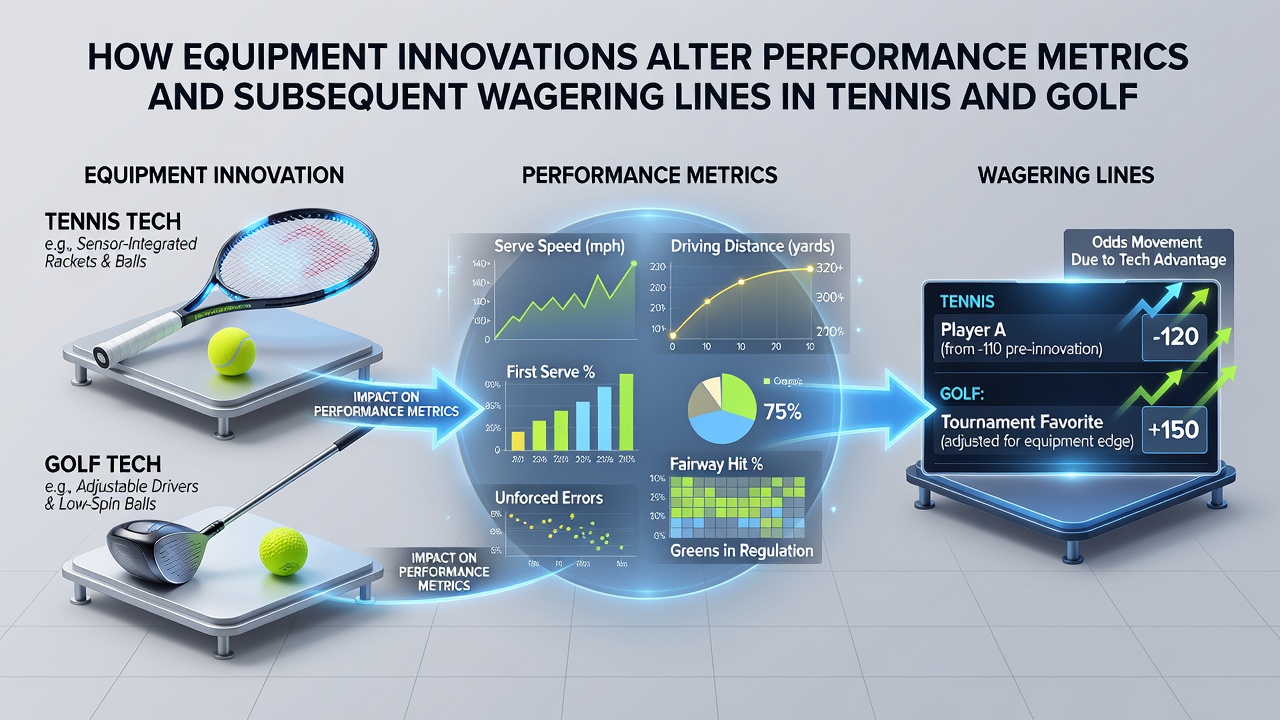
Betting exchanges monitor real-time data streams and revise lines when performance baselines move beyond historical norms. In tennis, higher ace rates have prompted adjustments to game-over lines at several ATP 500 events scheduled for late 2026. In golf, extended driving distances have altered birdie-or-better probabilities at specific holes, which feeds into match-play and three-ball markets. Operators draw on historical data sets that compare pre- and post-innovation periods to maintain balance in offered prices.
Industry reports from organizations such as the European Gaming and Betting Association outline how analytics teams integrate equipment-related variables into models. These models weight factors including court surface, altitude, and recent gear adoption rates. When a critical mass of competitors switches to newer frames or clubs, the resulting metric drift appears in published averages within one or two tournaments.
November 2026 Tournament Context
Events scheduled for November 2026 include several year-end championships where equipment compliance checks occur alongside performance tracking. Data released after these tournaments will provide further points for comparison, particularly on indoor hard courts in tennis and Bermuda-grass layouts in golf. Market makers have already begun incorporating preliminary equipment change notices into futures markets for those finales.
Conclusion
Equipment innovations produce measurable changes in serve speeds, driving distances, and rally statistics, and those changes propagate into revised wagering lines across tennis and golf competitions. Continued collection of standardized performance data allows consistent tracking of these effects through upcoming seasons.