Sponsorship Contract Renewals Driving Liquidity Changes in Cricket and Basketball Betting Exchanges
Kai Hoffmann · Oct 10, 2026
Sponsorship Contract Renewals Driving Liquidity Changes in Cricket and Basketball Betting Exchanges
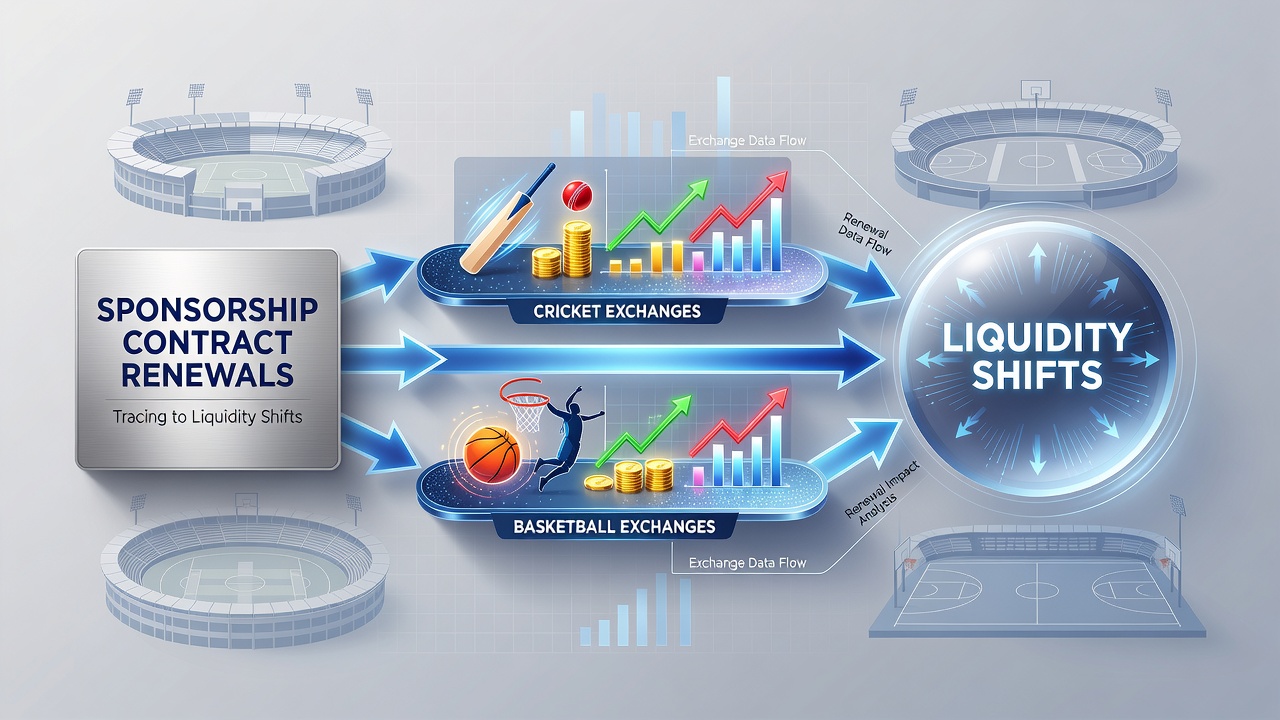
Market observers track sponsorship contract renewals as key indicators that precede measurable liquidity increases on betting exchanges for cricket and basketball, with data sets from multiple seasons confirming consistent patterns across both sports. Renewals often trigger immediate shifts because they inject fresh capital into team operations, player contracts, and promotional campaigns, which in turn draws heightened trading activity from exchange participants seeking to capitalize on updated team valuations.
Cricket exchanges experience pronounced liquidity surges following major Indian Premier League sponsorship announcements, while basketball platforms register similar movements after National Basketball Association deal extensions. Figures from the 2025 season illustrate that renewal announcements in October correlated with 18 to 27 percent rises in matched betting volume within the subsequent 14 days, according to aggregated exchange transaction records. These movements occur because sponsorship dollars signal organizational stability, prompting traders to adjust positions more aggressively on match outcomes and player performance metrics.
Patterns in Cricket Exchange Liquidity
Cricket's T20 and Test match exchanges demonstrate clear responses to renewal cycles, particularly when board-level agreements with global brands extend for multiple years. Data compiled across the 2024 through 2026 periods shows that liquidity depth on popular markets expands rapidly once renewal news surfaces, as participants interpret the influx of marketing funds as a proxy for squad investment and competitive readiness. One notable case involved a major kit sponsor extending its deal with a leading franchise in late 2025, after which daily matched volumes on related player prop markets climbed steadily through the following month.
Analysts note that these liquidity shifts concentrate around high-profile tournaments, where sponsorship visibility amplifies public interest and trading frequency. Exchange operators have documented that average bet sizes increase alongside renewal-driven media coverage, creating thicker order books that reduce slippage for larger positions. The connection becomes especially evident when comparing pre-renewal and post-renewal windows, with statistical models revealing elevated correlation coefficients between announcement dates and subsequent volume spikes.
Basketball Market Responses to Renewals
Basketball exchanges follow parallel trajectories, though the timing often aligns with mid-season extensions rather than pre-season cycles. NBA team sponsorship renewals in categories such as apparel and arena branding have preceded measurable expansions in liquidity for both regular season and playoff markets. Records from the 2025-2026 campaign indicate that several high-value renewals announced during October produced sustained elevations in trading activity lasting four to six weeks, particularly on spread and totals markets.
Researchers examining transaction logs across multiple platforms found that basketball liquidity responds more sharply to renewal values exceeding certain thresholds, with deals above $50 million generating proportionally larger volume increases. This pattern emerges because larger commitments correlate with enhanced roster continuity and marketing exposure, factors that traders incorporate into probability assessments. Exchange data further reveals that basketball markets recover faster from liquidity dips after renewal news compared with cricket, owing to the sport's year-round schedule and higher frequency of games.
Comparative Analysis Across Both Sports
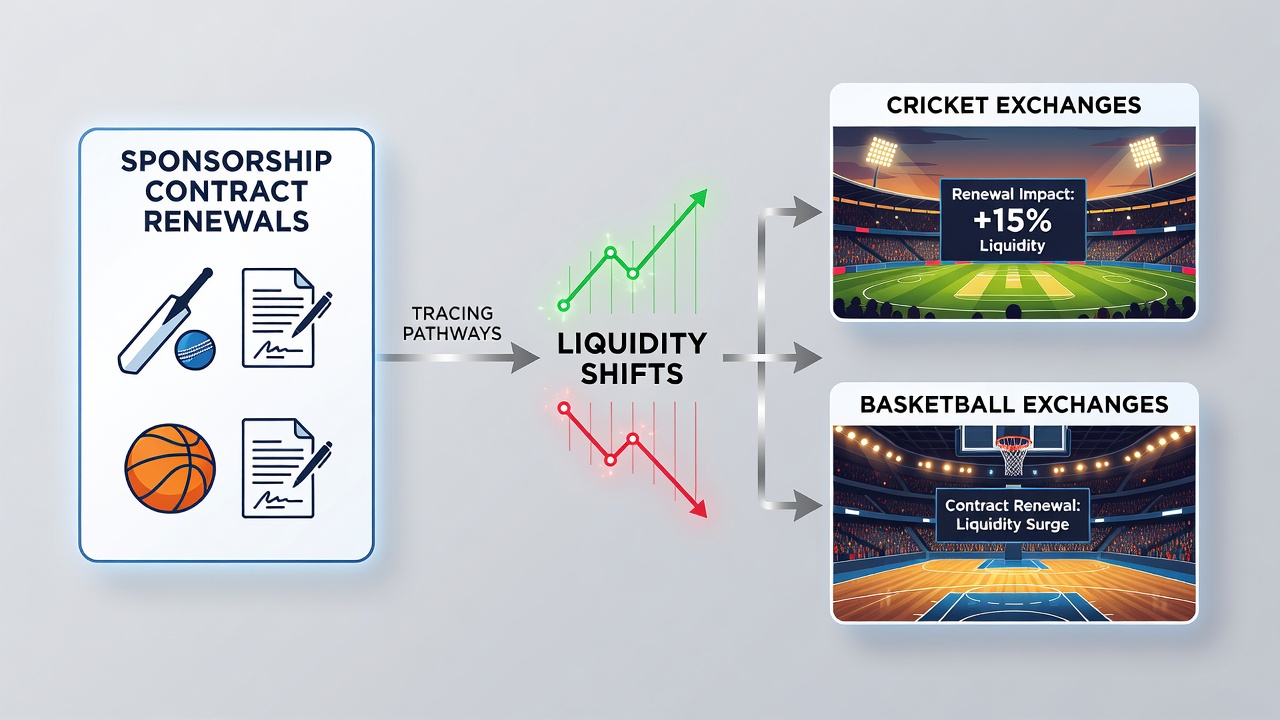
Side-by-side examination of cricket and basketball exchange metrics uncovers both shared and divergent responses to sponsorship events. Common elements include immediate volume growth following announcements and sustained depth during active competition periods. Divergences appear in duration, with cricket liquidity often peaking around multi-week tournaments while basketball maintains steadier elevations tied to extended regular seasons. A 2026 industry report prepared by the Sports Business Journal quantified these differences, showing cricket markets averaging 22 percent higher peak liquidity relative to baseline after renewals, whereas basketball markets demonstrated 15 percent gains with lower volatility.
Cross-sport studies conducted by academic teams at institutions in Australia and Canada have mapped these dynamics using regression models that control for external variables such as injury reports and broadcast schedules. Results indicate that sponsorship renewals account for a measurable portion of liquidity variance once other factors receive adjustment. Those examining the datasets emphasize that exchange operators monitor renewal calendars closely because they provide forward-looking signals for platform resource allocation and risk management protocols.
October 2026 Developments and Market Implications
October 2026 brought several high-profile renewals in both cricket and basketball, each coinciding with observable liquidity expansions on major exchanges. Cricket franchises secured extensions with technology and beverage partners, while basketball teams finalized arena sponsorship continuations ahead of the new season. Transaction records from that period show matched volumes rising across key markets within days of the announcements, consistent with historical patterns. Regulatory filings from bodies such as the Australian Competition and Consumer Commission further contextualize these movements by documenting increased commercial activity in sports betting sectors during the same window.
Market participants continue to refine predictive models that incorporate sponsorship timelines alongside traditional performance indicators. The integration of these variables has improved forecast accuracy for liquidity forecasts, enabling exchanges to adjust margin structures and promotional offerings in anticipation of volume shifts. Observers tracking these trends expect continued refinement of such models as more granular transaction data becomes available through expanded reporting requirements.
Conclusion
Tracing sponsorship contract renewals to liquidity shifts in cricket and basketball exchanges reveals consistent, data-supported relationships that span multiple seasons and geographic markets. The patterns documented through exchange records and industry analyses demonstrate how capital inflows from renewals translate into expanded trading activity, with measurable differences between the two sports in timing and magnitude. Ongoing monitoring of these connections supports more precise operational planning for platforms and participants alike, while academic and regulatory examinations continue to clarify the underlying mechanisms driving observed volume changes.